May 13
Thursday, May 14, 2015
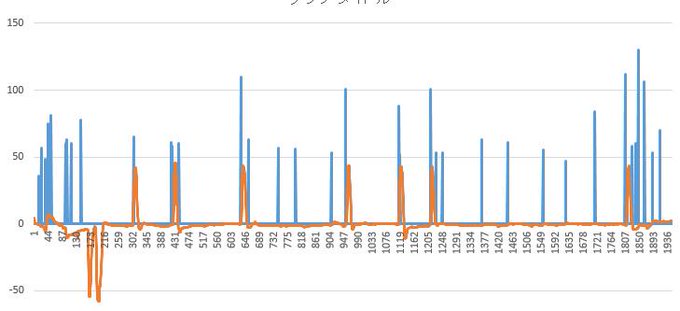
Tweets on May 12 and 13
May 13
Monday, May 11, 2015
One line JavaScript to make easy to copy tweets from Twilog
[".tl-icon", ".tl-time", ".tw-buttons", ".tl-posted", ".tl-name"].forEach(function(x){$(x).css("display", "none")}); $(".tl-tweet").css("padding", "0px 0px 12px 0px")
Tweets on May 8 to 11
May 10
When we use the KJ method, observer is fixed and things are moved. When we use the Clean space, things are fixed and observer moves.
May 11
Tweets on May 7
Tweets on May 6
https://twitter.com/nishio_en/stats/15579659720…
Thursday, May 7, 2015
How to Orgainze Ideas #3: Understand problems
Assume you are looking for solutions to particular problems. You may concentrate on "how to solve them", but it is not a good practice. If you can not find solutions or you found them but they won't work well, the major reason is misunderstanding of problems. People tend to search the solutions before clarifying the problems. Focus on "what to solve" before focusing on "how to solve it".
To clarify what to solve, first, let me break down "what the problems are." The problems are gaps between the ideals and the realities. The ideals are in your mind, such as your dreams. The realities are outside of your mind, such as facts. The problems are gaps between them, so if you throw your dream away, the problems disappear.
I recommend following two questions to clarify what the problems are:
- What are your ideals? (What is your dream? What do you think it should be?)
- What are the realities? (What happens actually? What is the fact in the situation?)
- How to fill the gaps? (How to solve the problems?)
Tuesday, May 5, 2015
Tweets on May 5
long time no see. from today i'll tweet at least one per a day. it's my new challenge.
I changed my Twitter account on my iPhone from Japanese one to this English one.
My wife have set her iPhone's language preference to English. It may be good practice. I'll try it.
My councilor for English said I have to write English more frequently. I know. I wrote blog entries last year but I couldn't continue it.
I think the reasons are the cost to write and the lack of response. Mini blogs, such as Twitter, are nice tools to walk around the problems.
In English I can't tweet complex things. The word "Complexity" is 10 characters long in English, but 3 characters long in Japanese.
I should change my profile soon
In iPhone's twitter client I can easily switch two accounts. But I couldn't find similar option in PC version. I logged Japanese one off.
Unfortunately Twitter to Facebook integration won't work with multiple accounts. Should I use IFTTT instead?
I mixed up "councillor" and "counsellor". The former is a member of a council. The latter is a person who helps you solve problems.
My wife told me about "tangle teezer", a kind of hair blush. I thought it was "tumble teaser", it may tease tumbleweeds...
If I can forward the posts on this account to the Japanese account problems are solved...
I set an alarm at 22 o'clock to remember me I have to tweet in English.
Sunday, January 11, 2015
How to Organize Ideas #2: What to write
Today I will explain about "what to write". When you have to create new ideas, you may try to write new ideas themselves. It is not a good way. Thomas Edison said, "Some people think perfect ideas can be born, but it is not correct. Ideas are born incompletely and then brush them up." I'm sorry but I read the quote in Japanese book, so words are not same as he said. If you are interested in it, read the "Your Creative Power" by Alex F. Osborn's, the father of brainstorming.
In other words, you can't write complete ideas. Don't try to do it. You can only write incomplete pieces of ideas. Do not be a perfectionist.
You may try to write something related to the subject. It is also a kind of perfectionism. James Webb Young said, "an idea is nothing more nor less than a new combination of old elements." So, before you find an idea as a new combination, you don't know what elements will combine. You can not know whether things are related to the subject before you get new ideas. Don't try to write what is related to the subject. Instead of that, write anything that comes to your mind. It may be related to the subject.
Steve Jobs said “You can't connect the dots looking forward; you can only connect them looking backwards. So you have to trust that the dots will somehow connect in your future.”I think it is a similar concept.
Next time I'll describe about a nice framework when you want to find a solution for some problems. I use it in the workshop at the Kyoto University Summer Design School and it works better than I expected. See you next time!
Saturday, January 10, 2015
How to Organize Ideas #1: Write first
Today I introduce a concept "write first". Why we should write first? Imagine whether it is easier to do calculations on paper or to do calculations in your head. Yes, the former is easier. Because you don't have to remember numbers, you can use your brain power efficiently.
To organize ideas, it is the same. If you don't write your thoughts on paper, you can't use your brain efficiently. So, at first, write everything in your brain, then organize them. That is the important concept.
I wrote the draft of the diary in 2 minutes in Japanese and then wrote the diary in 25 minutes in English. It is time to finish. Next time I'll write about "what to write".
Thursday, September 18, 2014
Keynote speech on PyCon JP 2014
Here is the movie recorded, but it is in Japanese and simultaneous translation was not recorded: CH10 Opening~Keynote: Hirokazu Nishio - YouTube
So I translated my slide and added explanations. Here is the English version: PyConJP Keynote Speech (English version)
If you are interested in, here is the original Japanese version: PyConJP Keynote Speech (Japanese version)
You are welcome to ask any questions!
Friday, September 5, 2014
What is better to call "hand-copying sample codes"?
This learning methodology is called 'Shakyo' in Japanese, named after a practice of hand-copying sutras. (Sutras for Buddhist is similar to the Bible for Christian, see Sutra copying - Wikipedia)
However there are some people with opposite view. The original Shakyo practice include to empty his/her mind. That means Shakyo as programming practice must include to empty mind. Hand-copying sample code in empty mind is not good practice for learning programming, we should think a lot.
I think the word Shakyo causes misunderstanding. But I have no idea to replace it. Do you have any idea for that? Please tell me your opinion.
Thursday, September 4, 2014
My book was translated and published in Chinese!
The book was published in Japanese on 2013, published in Korean on this March. If you are interested in English version, please check this page: Programming Langueges: Their Core Concepts.
Saturday, August 30, 2014
"Process to make an idea real is simple labor work..."
Takashi Murakami said "Process to make an idea real is simple labor work. So you should check by yourself carefully if the theme is worth to do labor work"
I found the quote on 2011 and tweeted in Japanese. Curiously it was retweeted in these days by a lot of people, so I translated it now.
Friday, August 29, 2014
Translation of my book is in progress
Hi, it is Dr. NISHIO Hirokazu. I published a book on April 2013 in Japan. It was the bestseller in Amazon programming category and it was the bestseller among computer related books published in 2013.
Here is the table of contents: Programming Langueges: Their Core Concepts
It was translated to Korean. Now the book is been translated to English!
You can read drafts of chapter 1 and 2 on GitHub: https://github.com/nishio/langbook
Sunday, August 24, 2014
Long time no see!
Tuesday, July 26, 2011
Extra information about QUMA

Pronunciation
COO of 'cool' + MA of 'mama'. It is similar to the word 'KUMA'(bear) in Japanese. It is because early prototype was put in teddy-bear skin.
How much? It must be expensive!
There are no official announcement about the price. However, SoftEther said "the selling price will be between 10000 JPY and 20000 JPY" on 2009/10/30, with showing QUMA prototype. (ref. 1) In my humble opinion, it will cost much, 2 or 3 times. However it couldn't possibly imagine that it costs over 100000 JPY. Again, it is my humble opinion, not an official one.
About contributers
SoftEther said CELSYS、ViVienne, 3D-GAN and University of Tsukuba are the contributor of the project. (ref. 2)
CELSYS is selling software to make illustrations, comics and animations. It is nice if those soft supports QUMA directly. It seems possible.
ViVienne got a subsidy to a 3D-related project from MEXT(Ministry of Economy, Trade and Industry) (ref. 3). SoftEther got the subsidy form MEXT too. SoftEther colocates with Tsukuba Univ. It seems those three players are cooperating tightly.
Additionaly, the figure designer ASAI Masaki tweeted about his contribution. (ref. 4) He is very popular as a creator of figma, action figures with exchangeable faces and modules.
Modularity
SoftEther said, the joints of QUMA are modular and can be re-assemble, so you can make various animals like camels, snakes etc, not only human. In my humble opinion, no one use snakes as snakes, but tentacles. ;)
Reference
(ref. 1) 3Dキャラの動きをぬいぐるみで操作、個人用モーションキャプチャ -INTERNET Watch
(ref. 2) 報道発表資料 - 開発中の「QUMA」技術を応用した 3D モーションキャプチャ装置を公開
(ref .3) IPA:2007年度第I期「未踏ユース」採択概要
(ref. 4) http://twitter.com/#!/masakiapsy/status/93823167306530816
Thursday, January 20, 2011
'git add -p'
Here is a sample script. I'm going to add new function on it.
def hallo():
print "hello!"
When I added new function 'bye', I also found there is a typo s/hallo/hello/. I fixed it too. Let me show 'git diff'
$ git diff
@@ -1,2 +1,5 @@
-def hallo():
+def hello():
print "hello!"
+
+def bye():
+ print "bye!!"
Now I wanted to commit it, but there are two changesets. I didn't want to commit all in one changeset. That's when I should use 'git add -p'!
$ git add -p
@@ -1,2 +1,5 @@
-def hallo():
+def hello():
print "hello!"
+
+def bye():
+ print "bye!!"
Stage this hunk [y,n,q,a,d,/,s,e,?]?
Git asked me whether choose the block of changes (hunk). But it contains both changes... I chose 's' to split it.
Stage this hunk [y,n,q,a,d,/,j,J,g,e,?]? s
Split into 2 hunks.
@@ -1,2 +1,2 @@
-def hallo():
+def hello():
print "hello!"
Stage this hunk [y,n,q,a,d,/,j,J,g,e,?]?
Now I pressed 'y' to choose the hunk, 'n' to skip another hunk and commit.
Stage this hunk [y,n,q,a,d,/,j,J,g,e,?]? y
@@ -2 +2,4 @@
print "hello!"
+
+def bye():
+ print "bye!!"
Stage this hunk [y,n,q,a,d,/,K,g,e,?]? n
$ git commit -m "fix typo"
[master 82bd7c6] fix typo
1 files changed, 1 insertions(+), 1 deletions(-)
Let me show 'git diff' again. The other modification left. Add it and commit it.
$ git diff
@@ -1,2 +1,5 @@
def hello():
print "hello!"
+
+def bye():
+ print "bye!!"
$ git add .
$ git commit -m "add new function: 'bye'"
[master fd5ab40] add new function: 'bye'
1 files changed, 3 insertions(+), 0 deletions(-)
How nice is it! Does other VCS (mercurial, subversion etc.) has such feature?
Tuesday, November 30, 2010
What is 4277075694
Finally I found: 4277075694 (0xFEEEFEEE) comes from Windows NT's heap manager. When a memory released, it is set to 0xFEEEFEEE.
Here are other magic numbers:
0xBAADF00D : 3131961357
0xFDFDFDFD : 4261281277
0xCDCDCDCD : 3452816845
0xDDDDDDDD : 3722304989
0xFEEEFEEE : 4277075694
Here is good instruction: Win32 Debug CRT Heap Internals
Thursday, July 15, 2010
The shortest oneline brainf*ck interpreter in python (558 characters)
get from here: http://gist.github.com/476940. It takes a filename as an argument and exec it as Brainf*ck code. All illegal characters are ignored.
exec(reduce(lambda x,y:x.replace(y[0],y[1:]),'Iz"d",|Jz"t",|K1),"|L.read(|Mimport |O,lambda|Psys.std|Q",0);z"|R"Yzp,|S}.get(code[|T)or |U"YZor z"p",p|Vifilter(bool,(|W)%256)or Z,"|X)for x in count())).next()|Y:lambda:|Zz"c",c+1)|q(globals().get(p,0)|zglobals().__setitem__('.split('|'),'Msys;from itertools Mcount,ifilter;z"cQpQj"O kYq==0)^(k==-1)and(Jc+kTI1TVId+{"]":-1,"[":1St],0)*kTd==0 or Jt+kXand z"c",t+1T1TZ);z"code",file(sys.argv[1])L));Vc==len(code)or({">U+K<U-K+Rq+1W-Rq+255W."YPout.write(chrq)TZ,",Rord(PinL1)W[":j(K]":j(-1),Sc]O:Z)()and NoneX'))
See this charm point!
>U+K<U-K+Rq+1W-Rq+255W
It's a definition of >, <, + and - !
Monday, July 12, 2010
Haskell Quiz Answer
Why some program show strange behavior? To answer the question, I should define what is "strange". For example the following behavior is strange.
// JS
var a = ***, b = ***, c = ***;
console.log(a < b); // true
console.log(b < c); // true
console.log(c < a); // true
In the case, "strange" means "different from mathematical behavior". Now the answer is clear, it is because those are not purely mathematical objects.
var a = "9", b = 10, c = "100";
console.log(a < b); // true
console.log(b < c); // true
console.log(c < a); // true
Haskell also shares some common "strangeness" with other languages.
Prelude> let x = *****
Prelude> x == x + 1
True
You may know the quiz in the other language. This "strangeness" come from the limited resolution of floating point number.
Prelude> let x = 2 ** 64
Prelude> x == x + 1
True
Now, return to the problem I posted.
In Haskell, you can overload different value on one name.
You may disagree. You may see "Multiple declarations of something" error.
But wait. Didn't you have ever defined 'show'? Isn't it overloaded?
Haskell is very different from C++/Java. In C++/Java, you can overload functions whose type of arguments are different. In Haskell, you can also overload functions whose type of return value are different. It is very important.
The quiz's tricks are,
- You can overload in Haskell
- You can overload functions whose return value are different
- and there are no need to take argument
- (+) and (==) are t -> t -> t, so it can be used to restrict arguments' type. x + (1::Int) says x is (x::Int).
- Number Literal (e.g. 0) are (Num a) => a, so it can be used as both (0::Int) and (0::Integer).
Now let me show my answer.
class Foo t where
a :: t
b :: t
instance Foo Int where
a = 0
b = 1
instance Foo Integer where
a = 1
b = 0
c :: Int
c = 0
d :: Integer
d = 0
main = do
print $ a + c == 0 -- True.
print $ a == c -- True. a::Int == c::Int == 0.
print $ c == 0 -- True.
print $ a + d == 1 -- True.
-- d is Integer. So the variable a is a::Integer,
-- which equals 1. "d == 1" is a misconception.
print $ b + c == 1 -- True. b::Int is 1.
print $ b + d == 0 -- True. However, b::Integer is 0.
print $ b == d -- True. Yes, both are 0::Integer;
print $ d == 0 -- True.
-- Why I use "d == 0" not "b == 0"?
-- Because it causes "ambiguous type" error.
-- You know, ":t 0" is "(Num t) => t". No way to determine
-- it is Int or Integer.
-- hints to make answer unique (perhaps...)
print $ sum([a, b, c]) -- 1: It is [0, 1, 0]::[Int]
print $ sum([a, b, d]) -- 1: It is [1, 0, 0]::[Integer]
print $ [a, b, c] !! a -- 0: (!!) take Int argument,
print $ [a, b, c] !! b -- 1: so it says (a::Int /= b::Int)
print $ [a, b, c] !! c -- 0
-- Why I didn't show [a, b, c] !! d is,
-- it causes error because d is Integer.